Dog Poop Color Chart: What Each Color Means
Healthy dog poop is chocolate brown. Other colors signal everything from food sensitivities to emergencies. Use this visual chart to interpret what you see and decide next steps.
Disclaimer: This chart is an educational reference, not a diagnosis. Persistent or severe symptoms always warrant a veterinary visit.
Chocolate Brown
HealthyMeaning: Healthy and normal
Common causes: Balanced diet; Normal bile pigment (stercobilin); Good digestion
What to do: No action needed. Continue current diet and routine.
Light Brown / Tan
Monitor 24-48hMeaning: Usually normal, sometimes mild diet effect
Common causes: Diet rich in chicken or rice; Recent food change; Mild GI shift
What to do: Monitor for 24-48 hours. Persistent paleness with appetite loss warrants a vet check.
Yellow / Mustard
Vet visit soonMeaning: Bile or liver involvement, food intolerance
Common causes: Food intolerance (often chicken or grain); Pancreatic insufficiency; Giardia infection; Liver/biliary disease
What to do: See your vet if persists beyond 24 hours or with vomiting, lethargy, or jaundiced gums.
Orange
Vet visit soonMeaning: Bile not processed properly
Common causes: Liver issue; Biliary obstruction; Rapid GI transit; Recent carrot/sweet potato intake
What to do: Vet visit recommended within 48 hours, especially if accompanied by yellow gums or eyes.
Green
Monitor 24-48hMeaning: Grass eating, gallbladder, or rapid transit
Common causes: Eating grass; Gallbladder issue; Rodenticide ingestion (urgent); Rapid intestinal transit
What to do: Mild green from grass is fine. Bright green is a vet emergency, can indicate rodent poison ingestion.
Red Streaks / Fresh Blood
Vet visit soonMeaning: Lower GI tract bleeding
Common causes: Colitis; Anal gland issues; Constipation tearing; Parasites; Foreign object
What to do: Small streaks: vet visit within 24-48 hours. Significant blood or jelly-like stool: emergency.
Black / Tarry
EmergencyMeaning: Upper GI bleeding (digested blood)
Common causes: Stomach or upper intestinal bleeding; Ulcer; NSAID toxicity (ibuprofen, aspirin); Foreign object damage
What to do: Emergency vet visit. Black tarry stool (melena) indicates serious upper GI bleeding.
White / Gray / Chalky
Vet visit soonMeaning: Biliary obstruction or excess bone/calcium
Common causes: Biliary obstruction; Liver failure; Pancreatic disease; Raw bone-heavy diet
What to do: Vet visit within 24-48 hours. White stool with jaundice symptoms is an emergency.
Gray / Greasy
Vet visit soonMeaning: Fat malabsorption
Common causes: Pancreatic insufficiency (EPI); Liver disease; Inflammatory bowel disease
What to do: Vet visit needed. Persistent greasy stool with weight loss suggests pancreatic enzyme issues.
Dog Poop Consistency Scale (Fecal Score 1-7)
| Score | Description | Health Meaning |
|---|---|---|
| 1 | Hard, dry pellets | Constipation, dehydration |
| 2 | Firm, segmented, holds shape | Ideal healthy stool |
| 3 | Log-shaped, slightly moist | Healthy, normal |
| 4 | Soft, holds shape, leaves residue | Mild GI upset |
| 5 | Soft pile, no shape | Diarrhea, monitor closely |
| 6 | Mushy, partly formed | Diarrhea, vet if persists 24h+ |
| 7 | Liquid, watery | Severe diarrhea, vet visit |
Save or Print This Dog Poop Color Chart
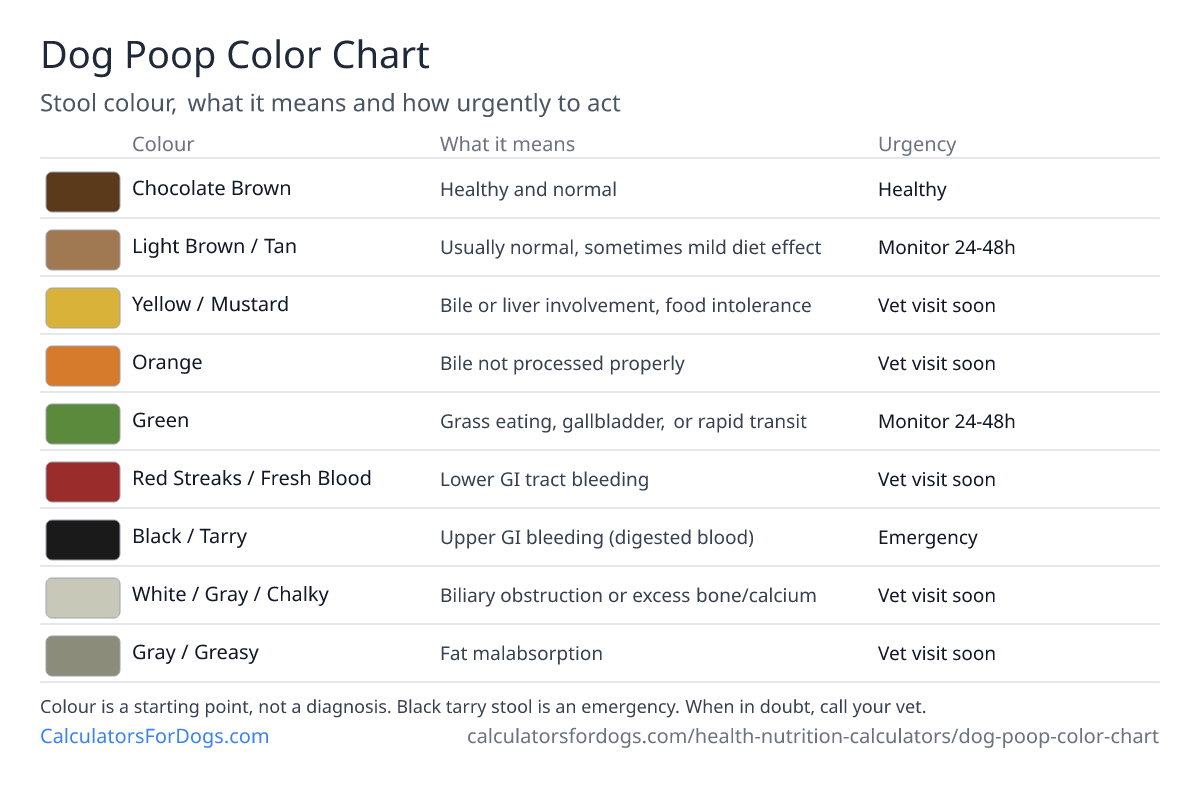
Right-click (or long-press) the image below to save the full-size chart for your phone or the fridge. It lists the same 9 stool colours, what each one means and how urgently to act, exactly as shown above.
What is a Dog Poop Color Chart?
A dog poop color chart is a visual reference comparing healthy and abnormal stool colors to help owners spot early signs of digestive, liver, pancreatic, or GI problems in their dog. Vets often ask owners to describe color and consistency before any other diagnostic step because stool changes are usually the earliest visible sign of GI illness, sometimes appearing days before vomiting, lethargy, or appetite loss.
Our chart above pairs nine common stool colors with their likely causes, urgency level, and what to do next. It is paired with a 1-7 fecal consistency score adapted from the veterinary Fecal Scoring System (similar to the Bristol chart in human medicine).
What Color Should Healthy Dog Poop Be?
Healthy dog poop is a consistent chocolate brown. The color comes from stercobilin, a pigment produced when bile is processed by gut bacteria. A balanced diet, normal bile production, and steady gut transit all combine to keep stool reliably brown.
Healthy consistency is firm but pliable, holds its shape when picked up, and segments easily. On the 1-7 fecal scoring scale, aim for a 2 or 3. A 4 indicates mild upset; 5-7 indicates increasing diarrhea severity; 1 indicates constipation.
How to Read the Colors
- Chocolate brown: Healthy. No action needed.
- Light brown / tan: Often diet-related. Monitor 24-48 hours.
- Yellow / mustard: Food intolerance, Giardia, or biliary issue. Vet if persists.
- Orange: Bile processing issue or recent orange-pigmented food. Vet within 48h.
- Green: Mild = grass-eating. Bright green = possible rodenticide. Emergency if bright.
- Red streaks: Lower GI bleeding. Vet visit within 24-48h.
- Black tarry: Upper GI bleeding. Emergency vet visit.
- White / chalky: Biliary blockage or excess bone/calcium. Vet visit within 1-2 days.
- Gray / greasy: Fat malabsorption (often pancreatic). Vet visit.
When to See a Vet Immediately
Treat as an emergency if you see:
- Black tarry stool (digested blood from upper GI)
- Large amounts of bright red blood or red jelly-like stool
- Bright green or blue-green stool (possible rodenticide)
- Any stool color change accompanied by lethargy, repeated vomiting, or collapse
- White or chalky stool with yellow gums or eyes (jaundice)
- Watery diarrhea lasting more than 24 hours, especially in puppies, seniors, or small breeds
Common Diet-Related Color Causes
Sometimes off-color stool is just food. Beet pulp can tint stool red-brown. Carrots and sweet potatoes can produce orange tints. Iron-rich liver-heavy diets can darken stool toward dark brown. Recent diet changes commonly produce 3-5 days of pale or yellowish stool while gut bacteria adapt. Use our Food Transition Calculator to pace diet changes properly and reduce these reactions.
Related Calculators
Explore these related tools to get a complete picture of your dog's care:
Frequently Asked Questions
Basic Understanding
What color should dog poop be?
Healthy dog poop is a consistent chocolate brown. The brown comes from stercobilin, a bile pigment. Any persistent deviation from chocolate brown warrants attention.
What is a healthy poop consistency for dogs?
Healthy dog poop is firm but pliable, segmented, and holds its shape when picked up. On the veterinary Fecal Scoring System (1-7), aim for a 2 or 3.
How often should a dog poop?
Most adult dogs poop 1-3 times per day. Puppies may go 4-5 times. Pooping less than once daily or more than four times warrants monitoring.
Color Meanings
What does yellow dog poop mean?
Yellow or mustard-colored dog poop usually indicates food intolerance, Giardia parasite, pancreatic insufficiency, or a liver/biliary issue. If it persists beyond 24 hours, see your vet.
What does green dog poop mean?
Mild green from grass-eating is harmless. Bright green or blue-green stool can indicate rodenticide ingestion, which is a life-threatening emergency.
What does black dog poop mean?
Black tarry stool (melena) is digested blood from the upper GI tract. Common causes include stomach ulcers, NSAID toxicity (ibuprofen, aspirin), or foreign object damage. This is a vet emergency.
What does red or bloody dog poop mean?
Bright red streaks indicate lower GI bleeding, often from colitis, anal gland issues, constipation, parasites, or foreign objects. Small streaks: vet within 24-48 hours. Large amounts: emergency.
What does white dog poop mean?
Chalky white stool can mean biliary obstruction, liver failure, or a diet very high in raw bone or calcium. If accompanied by jaundiced gums or eyes, treat as an emergency.
Practical Questions
Is one off-color poop a problem?
A single off-color stool, especially after a treat or table scrap, is rarely a problem. The pattern matters: 2+ consecutive abnormal stools, or any abnormal stool with vomiting or lethargy, warrants a vet call.
Can dog food change poop color?
Yes. Beet pulp produces reddish tones. Carrots and sweet potato produce orange. Iron-rich diets darken stool. Switching foods often causes pale or light brown stool for 3-5 days.
When should I bring a stool sample to the vet?
Bring a fresh sample (collected within 12 hours, refrigerated) any time you visit for GI symptoms, parasites, color/consistency changes, or annual checkups.
What is the Bristol stool chart for dogs?
Veterinary fecal scoring uses a 1-7 scale similar to the human Bristol chart. 1 = hard pellets, 2-3 = ideal firm, 4 = soft but holds shape, 5 = soft pile, 6 = mushy, 7 = liquid diarrhea.
What to Check Next
- Digestive Health Calculator: Assess your dog's overall digestive health.
- Food Transition Calculator: Slow diet changes to reduce stool problems.
- Fiber Intake Calculator: Dial in fiber for stool quality.
- Probiotic Dosage Calculator: Right-sized probiotic for your dog.
Use the Chart, Trust Your Vet
Your dog's stool is one of the earliest windows into their digestive and overall health. Use this chart to spot patterns and decide urgency, then pair it with our Digestive Health Calculator and Food Transition Calculator to take action. When in doubt, photograph the stool and call your vet. Color alone is rarely enough to diagnose, but it is often enough to know whether to wait, watch, or rush in.